
 Marcher pieds nus, ça commence chez BÄR.
 Pionniers de la liberté
 Original depuis 1982.
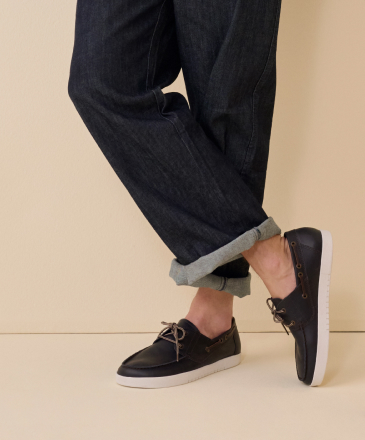
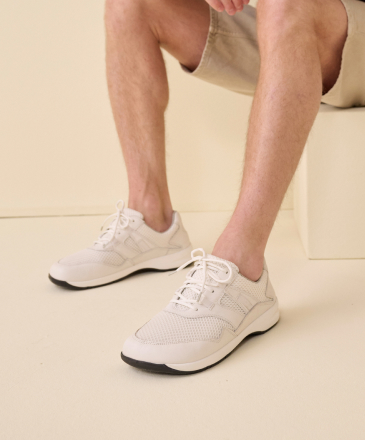
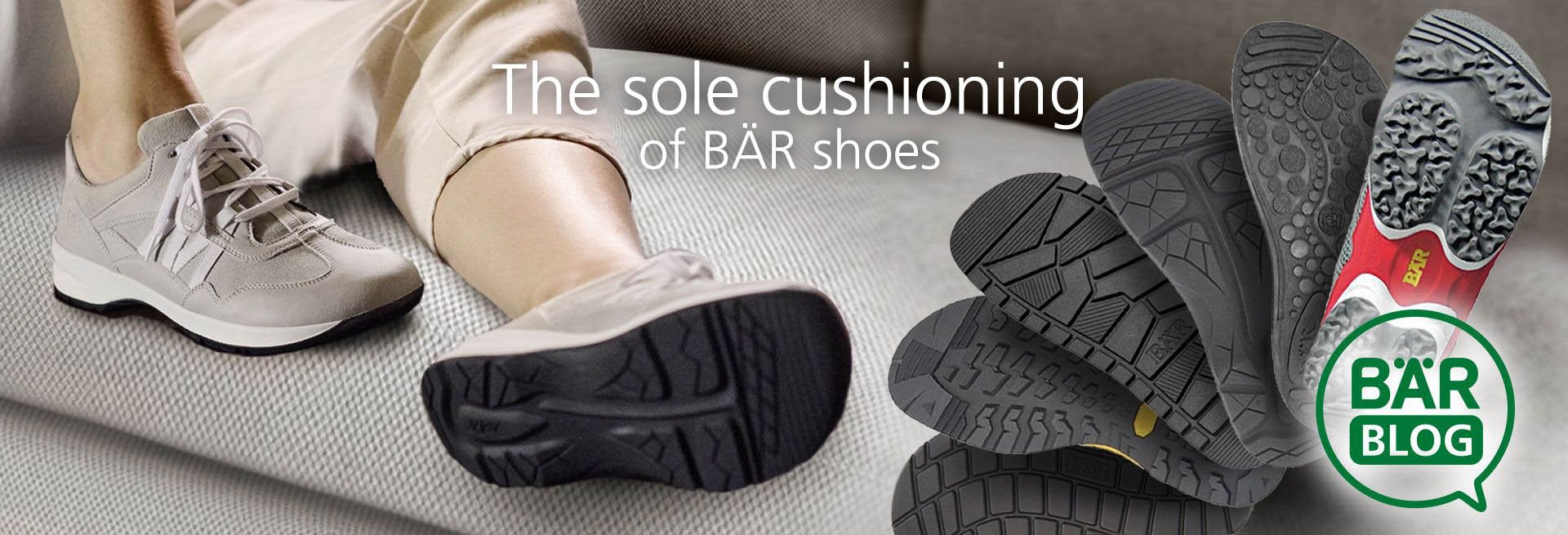
We often hear from athletes that the shoe is characterized by good cushioning. Apparently, that's half the battle. But what does sole cushioning actually mean and how does good cushioning affect the running experience?
First of all, we would like to explain what is meant by sole cushioning. The cushioning of a shoe is the ability to absorb the force of impact during each step. During this impact, a vibration travels from the muscles to the bones. This means that the body has to invest a certain amount of force to absorb this impact and roll the foot to continue moving. With a good cushioning system, this vibration is reduced and our body is relieved as it tries to absorb the impact. Each sole provides a different level of cushioning and, depending on the occasion, this can be crucial to having comfortable and functional footwear for sports, hiking or everyday life.
A little tip:When looking for your new BÄR shoes, you can search specifically for the degree of cushioning. Simply enter your desired degree of cushioning in the filter bar under "Degree of cushioning" and all shoes will be displayed. The degree of cushioning is also described in each shoe description under the product images.
You will find a particularly low degree of cushioning in our summer shoes or slippers, for example
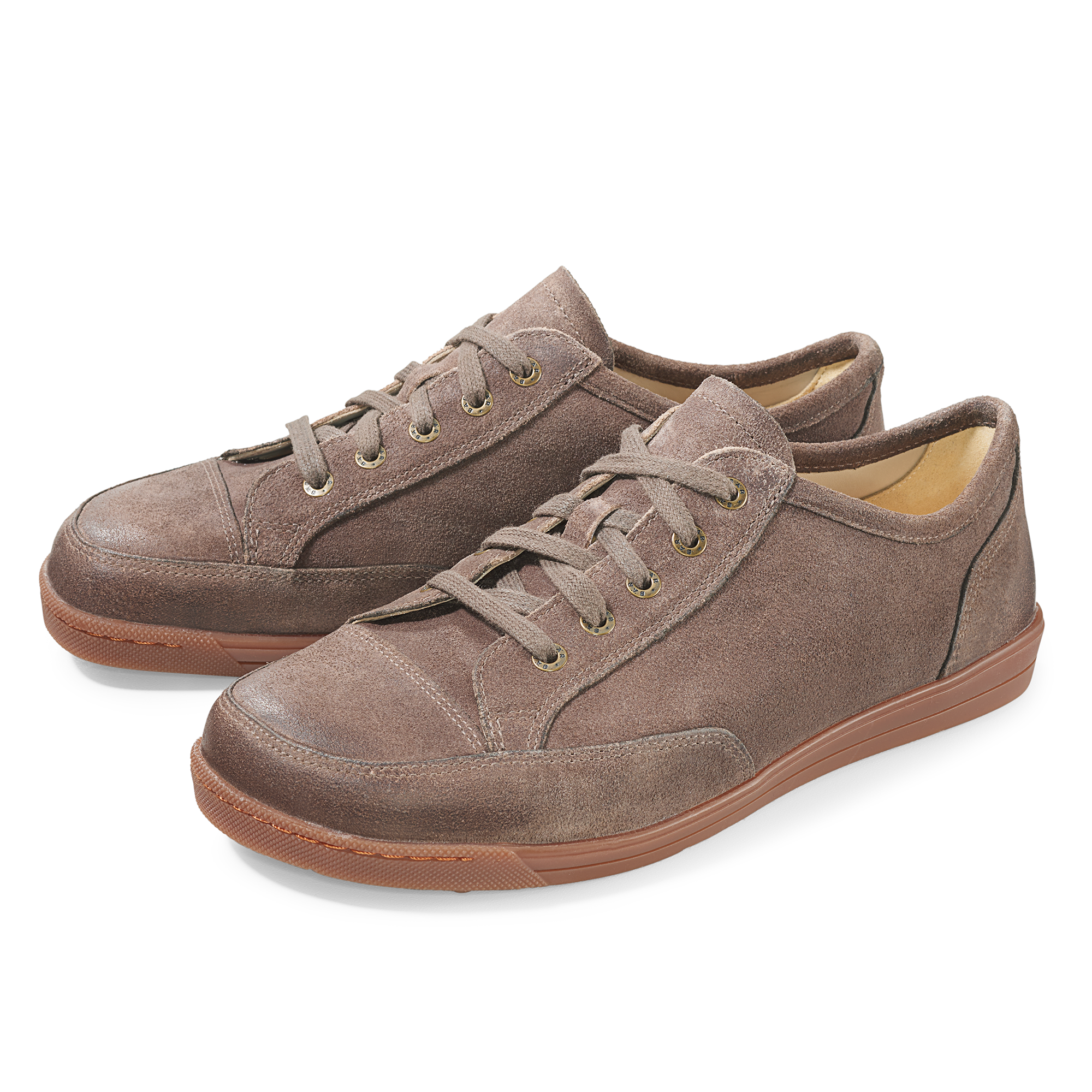
You will find medium cushioning in our everyday sneakers and boots, for example..
You will find particularly high cushioning in our sports and hiking shoes, for example
WHAT MATERIAL ARE OUR SHOE SOLES MADE OF?
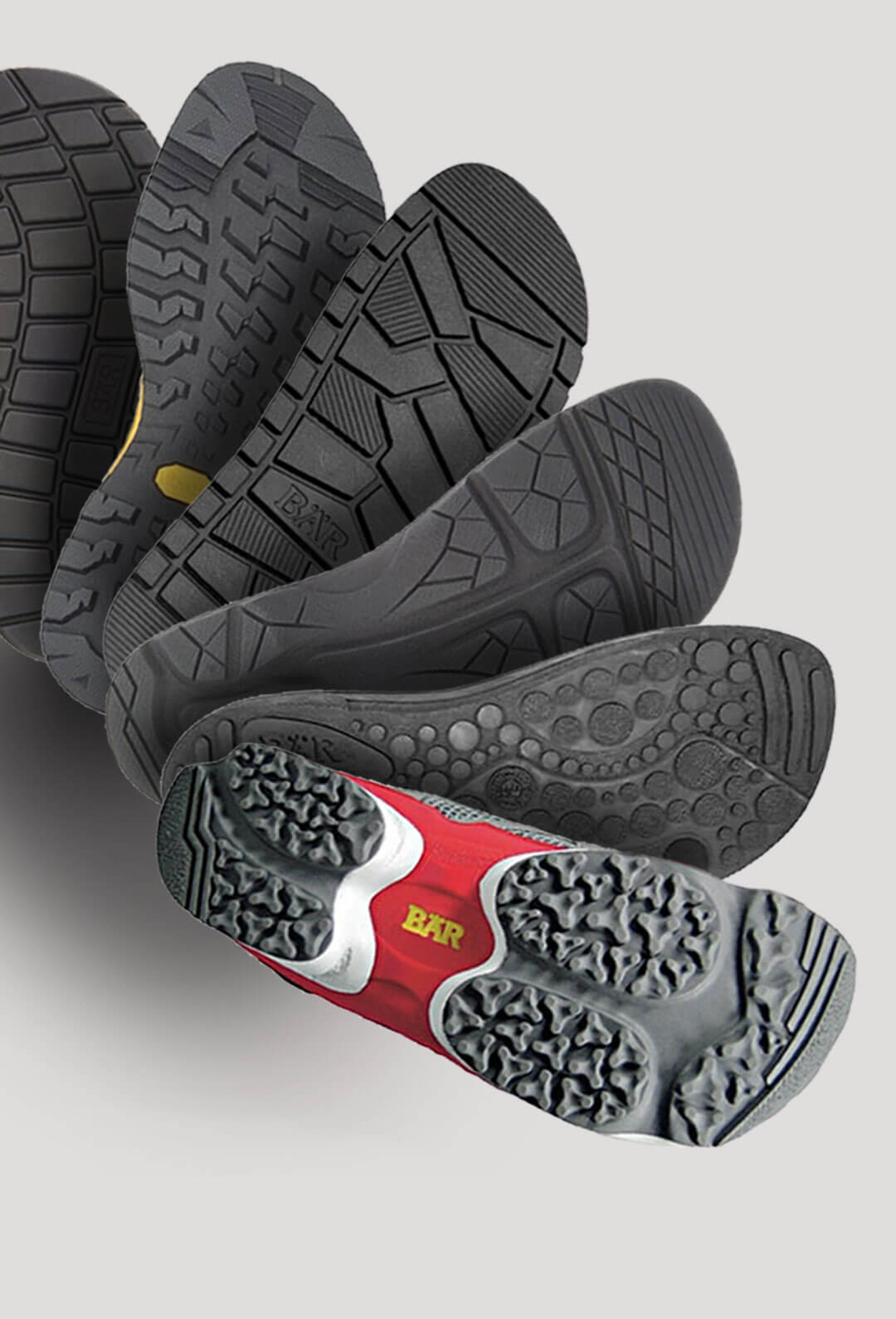
We use the right material for every shoe requirement. From soft natural rubber or natural crepe to abrasion-resistant polyurethane (PU) or TPU. Natural rubber soles are unbeatably soft and highly flexible. PU soles have the property of providing very good cushioning, which is why PU is mostly used in sports or hiking shoes. It is dimensionally stable and can withstand heavy loads such as rocks and branches. TP polyurethane (TPU) soles are elegant in appearance and very light. They provide good stability and guarantee a safe step. Rubber soles are highly resilient and support the rolling process for a barefoot feel.
The FIRMOFLEX ® technology impresses with its high stability, especially in our mountain comfort hiking boots. There are four cross struts in the forefoot area, which promise a higher degree of firmness without affecting flexibility. FIRMOFLEX® gives the shoe unbeatable durability.
Find out more about: FIRMOFLEX
Find out more about our different soles! Here:Our shoe soles
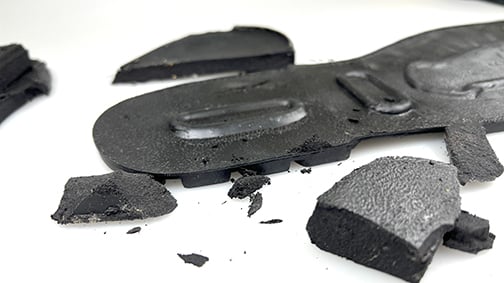
HYDROLYSIS-DISSOLVING THE SHOE SOLE
We have put together a few tips on how you can prevent hydrolysis on your shoes:
- Nettoyer et entretenir régulièrement les chaussures. Vous trouverez toutes les informations sur l'entretien des chaussures ici : Entretien des chaussures en hiver
- Stockez vos chaussures dans des pièces aérées, sèches et plutôt fraîches.
- Évitez les températures élevées, comme celles qui règnent dans la lumière directe du soleil, car elles accélèrent la progression de l'hydrolyse. Le cuir se fragilise et se casse.
- Vos chaussures de randonnée doivent toujours être sèches. L'humidité contribue à la formation de moisissures et les chaussures de randonnée peuvent se déformer.
- Utilisez des embauchoirs en bois, à insérer de préférence dans les chaussures directement après les avoir portées. Le bois de hêtre absorbe particulièrement bien l'humidité qui se forme dans la chaussure. Vous trouverez ici nos embauchoirs en bois : Accessoires pour chaussures
Alors pourquoi utiliser les semelles en PU ? Lire la suite : Hydrolyse
Functional cookies are absolutely necessary for the functionality of the web shop. These cookies assign a unique random ID to your browser so that your unhindered shopping experience can be guaranteed over several page views.
Used for fraud prevention by analyzing device information (device fingerprinting). Increases security during online shopping.
Manages and stores your consents in accordance with GDPR guidelines. Ensures your privacy settings are respected.
Shopware Analytics is an analytics service for tracking shopping behavior on this webshop, provided by shopware AG (Ebbinghoff 10, 48624 Schöppingen, Germany) in joint responsibility (see also the data protection information). The legal basis for data processing is Art. 6 para. 1 s. 1 lit. a GDPR. If data is stored locally, please refer to our privacy policy for further details on data processing.
The recipient of the data is shopware AG and IT service providers. Technologies used include local storage. The collected data includes customer group, pages visited, click paths, date and time of visit, information about the end device used (resolution, resolution density, operating system), referrer URL, information about the browser used, locale, search queries, time zone. The purpose of data collection is for marketing, analysis, and statistical purposes.
Data processing takes place within the European Union. If you have any questions about data protection, you can contact the data protection officer at [email protected]. Further information can be found at https://www.shopware.com/en/privacy/website.
Marketing cookies are used to display advertisements on the website in a targeted and individualized manner across multiple page views and browser sessions.
These cookies are used to collect and process information about the use of the website by users, in order to subsequently personalise advertising and/or content in other contexts.
These cookies are used for statistics and shop performance metrics.
Cookies that are required to display videos permanently.
Vimeo allows embedded videos to be played. Cookies may be set by Vimeo or its partners, and data may be transferred to third countries.
Tracking cookies help the shop operator to collect and evaluate information about the behaviour of users on their website.
Sur baer-schuhe.de, seules les livraisons en Allemagne sont possibles. Les commandes avec une adresse de livraison en Allemagne peuvent être passées sur baer-schuhe.de.
Sur baer-schuhe.de, seules les livraisons en Allemagne sont possibles. Les commandes avec une adresse de livraison en Autriche peuvent être passées sur baer-schuhe.at.
Sur baer-schuhe.de, seules les livraisons en Allemagne sont possibles. Les commandes avec une adresse de livraison en Suisse peuvent être passées sur baer-schuhe.ch.
At baer-shoes.co.uk we only process shipments for delivery to Great Britain. Orders for delivery to Great Britain please go to our store at baer-shoes.co.uk.
Sur baer-schuhe.de, seules les livraisons en Allemagne sont possibles. Les commandes avec une adresse de livraison en dehors de l'Allemagne peuvent être passées sur baer-shoes.com.
Nos produits sont vendus en France exclusivement par l'intermédiaire de nos partenaires. Les commandes avec une adresse de livraison en France ne peuvent être passées directement qu'avec JB Rodde :
Ja, weiter zu BÄR-Schuhe Deutschland. Ja, weiter zu BÄR-Schuhe Österreich. Ja, weiter zu BÄR-Schuhe Schweiz. Yes, forward to BÄR-Shoes UK. Yes, continue to BÄR-Shoes International. Oui, allez à JB Rodde